
Many website owners invest serious time and money into SEO, ads, social media, and content creation. Yet it still happens all the time that visitors arrive, browse a few pages, and then leave without any interaction. Analytics records the visit, but it does not explain why a potential customer never took the next step.
The problem is not only a lack of traffic. The problem is a lack of communication at the right moment.
That is exactly where an AI chatbot for a website becomes valuable. It allows a visitor to get an answer at the moment they need it, without waiting for an email reply or a phone call. Instead of being only a passive company presentation, the website becomes an active channel for support, sales, and inquiry capture.
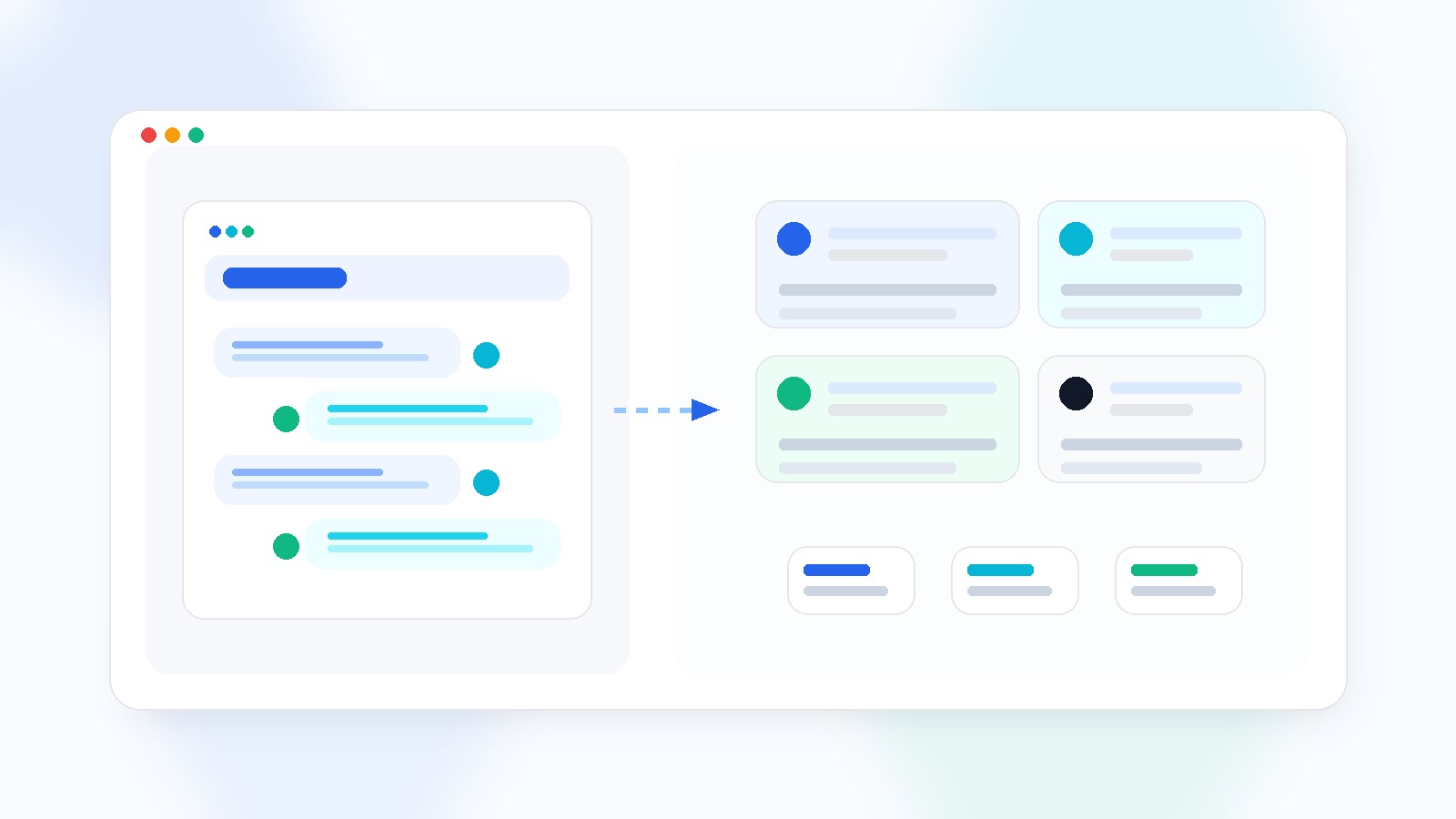
Why a contact form is no longer enough
A classic contact form still has its place, but its biggest weakness is that it assumes the user already knows exactly what they want.
In practice, that is often not the case.
Visitors may have doubts, want more information, or simply be unsure whether a certain service or product is the right fit. In those situations, a form feels like friction, while a conversation feels natural.
When a visitor can immediately ask things like:
- Is this service available for my type of business?
- How long does implementation take?
- Is support available in Serbian?
- How does integration with an existing system work?
the chance that they stay on the site and continue the conversation rises significantly.
If they do not get an answer right away, there is a strong chance they will look for a solution from a competitor.
What a modern AI chatbot actually does
A good chatbot is not only a tool that repeats information from the website.
Its real value comes from using a knowledge base, documentation, articles, FAQ sections, and other available information to provide relevant answers in the context of the exact question the visitor asks.
Modern solutions allow a chatbot to:
- answer frequent questions
- guide users through a buying process
- collect contact information
- create support tickets
- qualify potential leads
- connect the visitor with a team member when needed
The goal is not for artificial intelligence to replace people. The goal is to take over routine tasks so the team can focus on more complex requests.
How a chatbot improves customer support
A large share of support requests consists of repetitive questions.
For example:
- Where is my order?
- How can I change my account details?
- What are the delivery timelines?
- How do I reset my password?
- Are you open on weekends?
Individually, these questions are not difficult. But when they appear hundreds of times per month, they consume a lot of employee time.
An AI chatbot can provide immediate answers to those requests, which means:
- users get information faster
- support has fewer interruptions
- more complex cases receive more attention
The result is a more efficient organization and a better customer experience.
AI chatbot as sales support
Many people imagine a sales chatbot as an aggressive tool trying to push a product at any cost.
In reality, a well-designed chatbot works very differently.
It recognizes signals of interest and helps the visitor make a decision more easily.
For example, if someone:
- visits the pricing page multiple times
- compares different packages
- asks detailed questions about the service
the chatbot can suggest a next step, book a consultation, or collect contact details.
That is how a visit becomes more valuable, and potential clients stop leaving without any trace.
Does a chatbot affect SEO?
Not directly.
Google does not rank a website higher simply because it uses a chatbot.
However, the indirect effects can be meaningful.
When users:
- stay longer on the site
- find answers faster
- visit more pages
- interact more deeply with the content
the overall user experience becomes better.
On top of that, chatbot conversations become a valuable source of content ideas.
If a large number of visitors ask the same question, that is a clear signal that there is room for:
- a new blog article
- an expanded FAQ section
- a more detailed landing page
- a new guide or documentation page
That is why a chatbot can strengthen content strategy and increase the value of existing SEO traffic, especially when it works alongside an AI voice agent for inbound calls.
What makes a high-quality AI chatbot
For a chatbot to deliver real results, it needs to meet several important conditions.
A strong knowledge base
A chatbot can only be as good as the information it has access to.
If the information on the site is outdated or unclear, the chatbot will not be able to provide quality answers.
A communication style aligned with the brand
The tone of a law office, a medical provider, and an e-commerce store is not the same.
The chatbot should communicate in a way that matches the company identity and the expectations of the target audience.
Simple handoff to employees
There are situations where a visitor needs to talk to a real person.
That is why the chatbot must know when to hand the conversation to a team member, together with all previously collected information.
Performance tracking
Without analytics, it is impossible to evaluate whether the system is effective.
It is important to monitor:
- the number of started conversations
- the most common questions
- the number of generated leads
- the number of created tickets
- the percentage of conversations that move to human support
How to start implementing an AI chatbot
The most common mistake is trying to make a chatbot solve every possible scenario from day one.
A much better approach is gradual implementation.
The process usually looks like this:
- Identify the most common user questions.
- Organize and improve the knowledge base.
- Define which situations the chatbot handles on its own.
- Set rules for handing conversations over to employees.
- Test the system on real user inquiries.
- Continuously optimize it based on the collected data.
Over time, more advanced capabilities can be added, such as CRM integrations, automated ticket creation, personalized recommendations, and lead segmentation.
The biggest misconception about chatbots
Many people expect a chatbot to be perfect immediately after launch.
In practice, the most successful systems improve through real conversations with users.
Each new interaction reveals:
- what users most often ask for
- where misunderstandings happen
- which information is missing
- how communication can be improved
That is why a chatbot is not only a support or sales tool. It is also an extremely valuable source of market insight.
Today, an AI chatbot for a website represents much more than a simple chat window.
It can be the first line of customer support, a lead-generation tool, a sales assistant, and a source of important information about user needs.
Companies that use chatbots successfully are not trying to replace people with artificial intelligence. They use AI to automate routine tasks, speed up communication, and let employees focus on the work that creates the most value.
When it is set up properly, a chatbot turns anonymous visits into conversations, conversations into inquiries, and inquiries into business opportunities. That is why more and more companies now see an AI chatbot as an important part of their digital strategy.