
Most companies still treat the phone as nothing more than a communication channel. It rings. Someone answers. The conversation ends. Then later, someone tries to remember what the client said, who should receive the information, and whether anything was recorded properly in the first place. That is where time is lost. That is where information is lost. And very often, that is where money is lost.
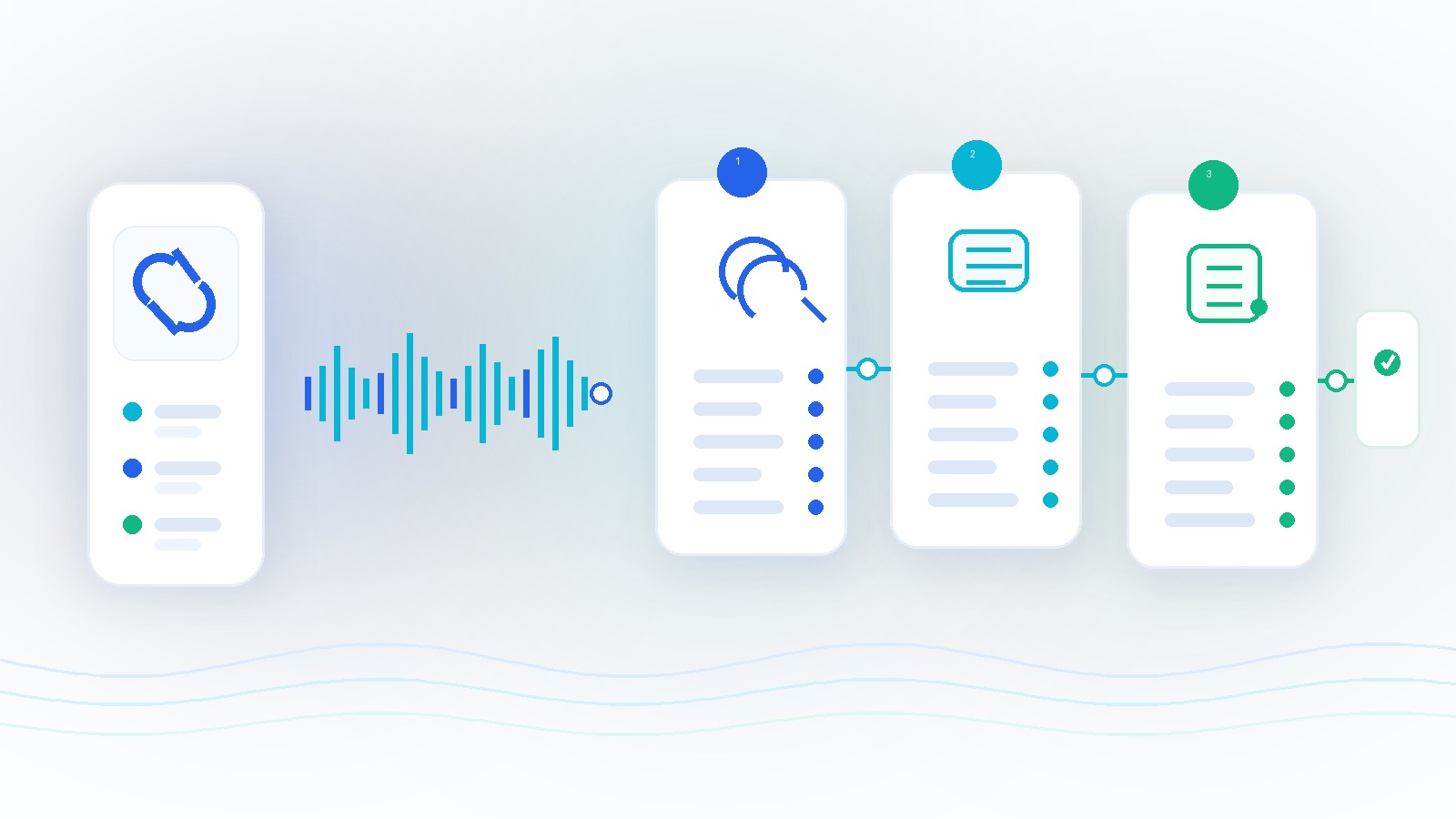
AI telephone agents change exactly that first step. Not only because they can answer a call 24/7, but because they can listen, understand the caller's intent, extract the important details, and turn the conversation into a structured request. In other words, the call is no longer just a conversation. It becomes the beginning of a process.
That is the real difference. It is not the same when a system merely answers a question and when a system understands what needs to happen next. If the caller is reporting an issue, requesting an appointment, checking status, or raising something urgent, a serious company does not only need that call to be ?answered.? It needs the call to be properly recorded, routed, and prepared for the next step.
What AI voice agents really are
When people hear the phrase AI voice agents, they often imagine a frustrating automated menu. Press one. Press two. Start over. That is not what this is.
Modern AI voice agents can hold a more natural conversation, recognize context, and follow the flow of a call without a rigid script. But the most important part is not the voice itself. The most important part is what happens to the information after the conversation. If there is no clear flow, you only have an interesting technical add-on. If there is a clear flow, you have an operating system for inbound requests.
The point is not the menu. The point is to convert a conversation into usable business input that continues after the conversation.
Where companies most often lose calls
The biggest problem is not only the missed call. The problem is everything that comes after it. Someone answered, but did not record enough. Someone recorded it, but never forwarded it. Someone forwarded it, but without context. Someone solved it, but nobody tracked it. In the end, the whole team feels busy while things still keep leaking in every direction.
This is especially visible in industries with repetitive inquiries, urgency, and constant handoffs between people. Property management, service businesses, clinics, reservations, customer support, administration, logistics. Anywhere an incoming call is really the beginning of a task, an AI agent can make a huge difference.
- any business with a high volume of similar incoming calls
- teams working under pressure and constantly passing information between people
- systems where each request needs priority, context, and a clear owner
What a good system looks like in practice
A good system does not stop at answering the phone. It takes the call, understands the reason for it, collects the key details, and turns them into a clear request. Then that request moves into the next step. It reaches the right person. It enters the CRM or another internal system. It gets a priority. It remains recorded. It can be tracked.
In other words, the goal is not to sound modern. The goal is to reduce chaos at the entry point. When you solve that, you get faster responses, less repetition, less lost information, and a much cleaner operational flow. That is not a small improvement. It changes the daily rhythm of the team.
The biggest value is not only in answering faster. It is in the fact that the team no longer needs to constantly reconstruct the past. Everything important already exists in the system and can be used immediately.
Does an AI agent replace people?
No. At least not in companies that know what they are doing. A good AI agent is not there to remove people from the picture, but to remove unnecessary waste of attention. People should not spend energy answering the same question for the hundredth time, copying details out of a conversation, or chasing notes across scraps of paper and chat messages.
It is much more useful for AI to handle the first layer of communication and preparation, while people step in where judgment, responsibility, empathy, or decision-making are needed. That is when you get both speed and quality. That is the real point.
How to know whether this is right for your company
If your phone rings often, if you handle different types of inquiries, if employees waste time repeating the same explanations, and if every call needs some real follow-up, then you probably have a strong use case for an AI telephone agent.
The simplest way to say it is this: if inbound communication is a bottleneck for your business, an AI voice agent is not a toy. It is infrastructure. And the sooner you set it up properly, the sooner you stop losing requests that have already reached you.
Today, many people talk about AI in broad, abstract, and noisy terms. But in practice, value is often hidden in something very simple: making sure every incoming call is handled properly. When an AI telephone agent takes that first contact and turns it into a structured request, your company does not get just another channel. It gets order at the point where chaos usually begins.